Ivy's Garden
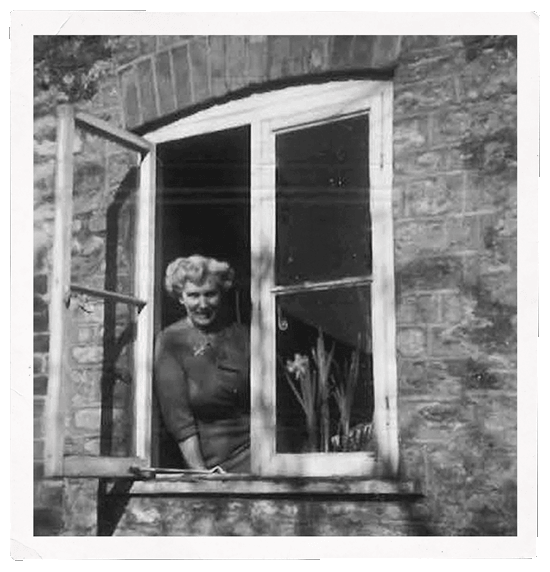
Our grandmother Ivy wasn’t just a talented cheese- and butter-maker. She also ran a busy working farmhouse, which included taking care of a sizeable garden. Fortunately, like her family before her, she loved and understood nature, so her garden was run as efficiently and creatively as her dairy. As with all things she did, this meant employing a mix of rigour and instinct, along with great skill and care.
A century ago, when Ivy began running her household, she had plenty of mouths to feed. As well as her own family, she would often be cooking for farm workers, and she also enjoyed entertaining. As a skilled cook, she was very particular about the ingredients she used, so she would grow most of them herself. That meant that Ivy’s garden was built for self-sufficiency, with a mix of vegetables, herbs and flowers in a perfect balance of practicality and beauty.
First and foremost, the garden was the family pantry: if it could be grown, she would grow it. There were herbs for cooking, vegetables for storing, and fruits for jams and pickles, including fragrant rosemary and parsley, sweet strawberries, juicy figs and apples, and even rhubarb for crumbles. Fruit and vegetables always came first, and she would plant what she knew would grow well in the wet Somerset weather, always planning ahead to think about what could be cooked fresh, what could be preserved or shared with neighbours. Around the edible crops, the borders were dotted with classic flowers, never extravagant but designed to light up the space and soften the serious hard work that was the main business of the plot.
When it came to the garden, Ivy was disciplined: as all members of her family remember, she had her way of dealing with things and everything had an order. Life was too busy for doing things slowly, half-heartedly or on a whim. However, there was never any doubt of her love for gardening, both as an aim and an activity. It wasn’t just another chore for her, and she took pride in seeing things grow, bringing her garden into the kitchen and knowing the land responded to care as much as effort.
Ivy’s garden remains one of our greatest inspirations. In her day, “sustainability” wasn’t a concept, it was a way of life. Waste wasn’t an option, ash from the fire went back on the land, kitchen scraps were fed to chickens or became compost, and water was collected from wherever it fell. Where others saw weeds, she saw signals from the soil, and where others ploughed over hedgerows to “make things easier”, she protected them, knowing they sheltered the birds and insects that kept her garden balanced. It’s what we still do, on a larger scale, with the land that we love and which brings us so much.
We also remember that Ivy’s way with her garden was about consistency: steady hands, daily discipline, and a deep belief that if you look after the land, it will look after you. This is just the same approach she brought to her cheesemaking – never rushing the milk, or the maturation process. She trusted time, trusted the land and trusted her methods. It’s not always the way the rest of the world works, particularly in the 21st Century, but we remember that it’s the way that nature prefers it.