When it comes to the crunch
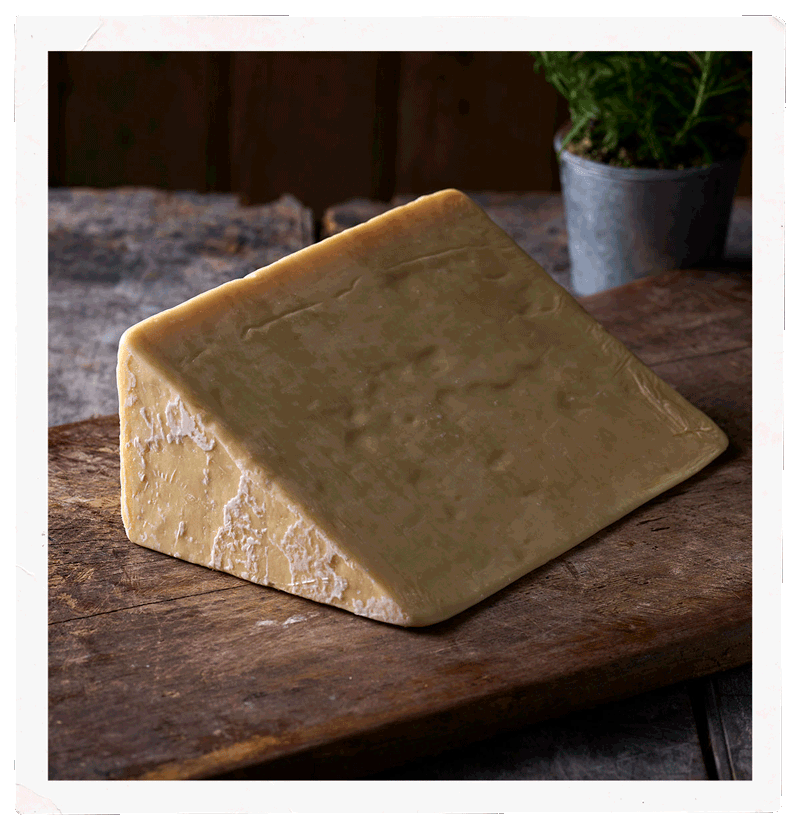
As with every great Cheddar, there are lots of reasons why people love Ivy’s Reserve Vintage Cheddar, and over the decades we’ve heard many of them from awards judges, fellow cheesemakers and most importantly our customers. There’s the creaminess, the crumble, the sharpness, the aroma – and all points in between and in combination.
But one we hear often is perhaps the least familiar and the least understood: the crunch. It’s a specific texture that contrasts with the smoothness and crumble of the cheese, and which brings with it a savoury and salty note that adds to that special balance of eating pleasure. While we know it generally just as “the crunch”, it has other names: “cheese diamonds”, “cheese crystals” or, a little more scientifically, calcium lactate.
So what is it? Well, it’s an entirely natural part of the ageing process, appearing when a cheese has been maturing for over a year, and it can be found in a variety of medium and hard cheeses including Parmesan and gouda as well as Cheddar.
It occurs as chemical changes take place in the cheese, creating the textures, flavours and aromas we cherish in Ivy’s Reserve. As natural proteins break down during the maturing process, lactic acid is formed. This then combines with the calcium and, as the moisture levels drop, forms into tiny white crystals. While these are found on the outside of the Cheddar, you might also get tyrosine crystals inside it, which are created by the amino acids breaking down.
For some, it’s a bit of a surprise, and is mistaken for a sign that the cheese has gone off. We’re asked about it a lot, which is why we’ve written a note about it on the packs to explain that it’s totally natural. But, as any cheesemaker will tell you, crystals are the sign of a good cheese. They indicate that it’s been aged in the correct manner and for a good length of time, and will have a complex taste and texture.
When the production of Cheddar became highly industrialised in the last century, producers tended to make great efforts to avoid crystals, or to remove them from cheese – although we never did. Now, we’re pleased to see that cheese-lovers increasingly recognise crystals for what they are: a sign that a Cheddar has been properly aged, by a cheesemaker who takes their craft seriously.
From the start, our grandmother Ivy was serious about how she made her Cheddar. Working from the basis of a family recipe, she refined and perfected her own version using both the science and the art of cheesemaking, experimenting at each stage of the process from milking to maturation until she had found the results she was looking for. The award-winning cheese that she kept back for the family, what we now know as Ivy’s Reserve, was aged for a minimum of 18 months to bring out all its flavour and texture – and that included the crunch.